Water Heater Drain Valve Leaking: Causes and Fixes
Fix a leaking water heater drain valve with this DIY guide. Covers tightening, replacing, and upgrading valves to stop drips permanently.

April 1, 2026
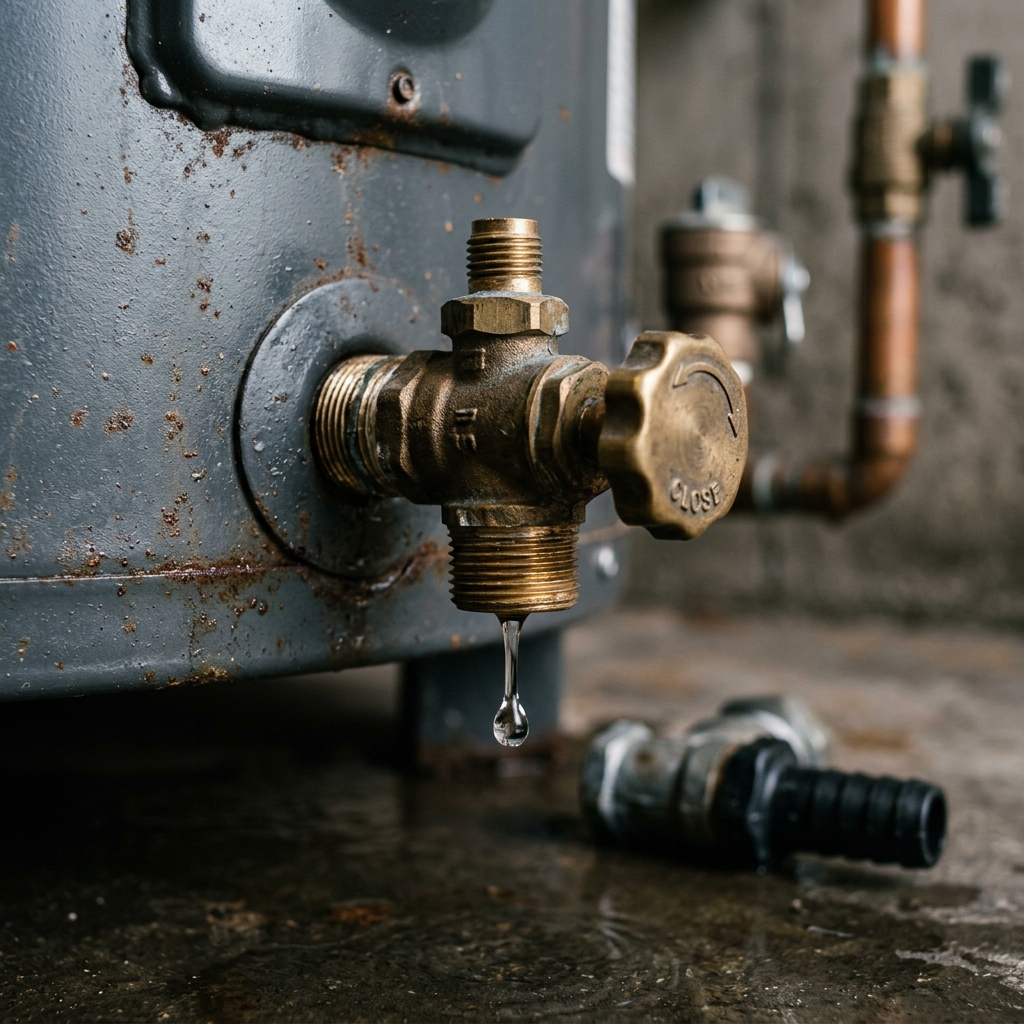
Unique angle here: confirm the drip is the valve outlet or the valve-to-tank threads before you buy a cap. Water from the steel jacket is water heater leaking from bottom. A T&P discharge is a different valve: how to fix a leaking relief valve.
Desk note: A drip from the hose nipple is a valve job. Water from the steel jacket is replacement. Cost figures below are research snapshots from typical listings, not quotes. This is a HowToDrainAHotWaterHeater.com Editorial Team research-desk sequence, not a staged leak-lab and not a shop diary.
A small puddle under the water heater is easy to dismiss. A few drops, a damp spot on the floor. Water and time still warp flooring and feed mold. Even a slow drip from a drain valve can do real damage if you leave it.
The fix is usually a parts-bin job if the leak is actually the valve. This page walks through every valve-side cause. It does not treat a wet steel shell as a $3 cap.
Before You Cap the Drip
Do this in order. Buying the cap first is how people hide a tank-shell leak behind a shiny brass plug.
- Dry the jacket and the floor. Wipe the entire bottom half of the heater and the floor beneath it. Lay paper towels around the drain valve. Wait 30 to 60 minutes. Fresh water from the hose nipple or the valve-to-tank joint is this page. Water from the steel, the foam seam, or a rust blister is replacement.
- Rule out the T&P. The relief valve sits higher, with a discharge pipe running down. A drip at the pipe end is T&P diagnosis, not a drain-valve cap.
- Try a full close before a part. Gate valves need several turns. Plastic cracks if you torque the handle like a pipe plug.
- Plan the real repair. A cap buys days, not years. The permanent fix is how to replace a water heater drain valve after the water line is below the port. If the valve will not drain for that swap, start at how to unclog a water heater drain valve or water heater not draining.
- Then open a listing. A garden hose cap is the brass-cap SKU this site already points at: rubber washer, garden-hose thread. It is a backstop, not a new valve. The Camco brass drain valve is the replacement already used on this site when the factory plastic valve weeps. A tagged brass garden hose cap search is safer than guessing a third ASIN.
Listing check (hose cap, not a winterize plug): confirm a brass garden-hose cap with a rubber washer that threads onto 3/4-inch GHT — plastic winterize plugs and washing-machine fill caps share the same “hose cap” search.
If the tank stays in service and you want a warning on the floor, the Govee WiFi water leak detector three-pack is the hub-plus-puck set already used on this site. One sensor in the pan is enough. Compare options in best water leak detectors. Money story: how we make money.
Identifying the Leak Source
Water runs downhill and follows surfaces. A leak higher on the tank can drip down and pool near the drain valve.
How to Confirm It Is the Drain Valve
- Dry the area completely. Wipe down the entire bottom half of the water heater and the floor beneath it with a dry towel.
- Lay paper towels or newspaper around the drain valve. This makes fresh drips easy to spot.
- Wait 30 minutes to an hour. Check where the new moisture appears.
- Look directly at the valve. A leaking drain valve drips from the valve outlet (the hose connection point) or from the joint where the valve threads into the tank.
Other Common Leak Sources
If the water is not coming from the drain valve:
- Temperature and pressure (T&P) relief valve. This valve is on the side or top of the tank, with a discharge pipe running down. If it is dripping, the tank pressure may be too high. See our safety guide for T&P valve troubleshooting.
- Cold water inlet or hot water outlet connections. Check the fittings at the top of the tank for moisture.
- Tank body. Water seeping from the tank itself (not a valve or fitting) usually means internal corrosion and tank failure. This is not repairable. Walk how long water heaters last.
Common Causes and Fixes
Treat the dollar bands as street-price research snapshots, not a quote.
Cause 1: The Valve Is Not Fully Closed
This is the most common cause, and the easiest fix. If you or a plumber recently drained the water heater, the valve may not have been turned all the way back.
Fix: Turn the valve handle clockwise until it stops. On a gate-style valve (the standard type on most water heaters), this may require several full turns. Tighten firmly but do not force it. Plastic valves crack under excessive torque.
Cause 2: Sediment Is Preventing a Seal
Sediment particles can lodge in the valve seat, preventing the gate or washer from closing completely. You can often hear a slight hissing or see gritty residue around the valve opening.
Fix:
- Attach a short garden hose to the valve.
- Open the valve fully to flush water and sediment through it.
- Close the valve sharply several times in succession to dislodge particles from the seat.
- If the leak stops, do a full flush to remove the rest of the sediment from the tank. No floor drain: how to drain a water heater with no floor drain.
Cause 3: Worn Internal Washer
Gate-style drain valves use a rubber washer that degrades over time from heat exposure and mineral contact. Once the washer deteriorates, the valve cannot seal even when fully closed.
Fix: Replace the valve. Attempting to replace just the washer inside a water heater drain valve is impractical for most homeowners. A new valve is a research-range under $15, and the swap is a parts-bin job on a drained tank. See our valve replacement guide.
Cause 4: Cracked Valve Body
Plastic drain valves (white or gray, standard on many water heaters) are prone to cracking. Heat cycles, UV exposure in some installations, and physical stress from hose connections weaken the plastic over time. A cracked valve body will leak regardless of whether the internal seal is good.
Fix: Replace the valve. This is the usual moment to upgrade from plastic to a brass ball valve.
Cause 5: Loose or Corroded Threads
The drain valve threads into the tank with pipe threads. Over time, the thread sealant (Teflon tape or pipe dope) can degrade, or corrosion can create gaps in the threaded connection. This causes a leak at the base of the valve where it meets the tank, not from the valve outlet.
Fix:
- Drain the tank. You need the water level below the valve.
- Unscrew the old valve.
- Clean the tank threads with a wire brush.
- Wrap the new valve threads with four to six wraps of Teflon tape (clockwise as you look at the thread end).
- Thread the new valve in by hand, then tighten with a wrench. One to one-and-a-half turns past hand-tight is usually sufficient.
The Temporary Fix: Capping the Valve
If you cannot replace the valve immediately, a brass hose cap provides a reliable temporary seal.
- Use the brass garden hose cap with a rubber washer already linked above, or the same part from a hardware store (research-range a few dollars).
- Thread it onto the drain valve outlet and tighten by hand, plus a quarter turn with pliers.
- Check for drips. The rubber washer should create a tight seal against the valve face.
This buys you time. Plan to replace the valve within a few weeks. A cap does not fix the underlying problem, and it adds another potential failure point.
Choosing a Replacement Valve
You have two main options:
Standard Gate Valve
These are the same type that came with the heater. They have a round handle that turns several times to open or close. They work fine. A brass version is a research-range $8 to $12.
Pros: Familiar, inexpensive, widely available. Cons: Narrow bore that clogs more easily. Multiple turns to open and close. The gate mechanism wears over time.
Full-Port Brass Ball Valve
A ball valve uses a quarter-turn lever to open a full-diameter passage. These are a research-range $15 to $25 and are a significant upgrade.
Pros: Quarter-turn operation. Full port means sediment passes through more easily. More durable mechanism. Less likely to leak over time. Cons: The lever sticks out further, which matters in tight installations.
If you are already replacing the valve, the extra dollars for a ball valve pay off the next time you flush.
Skip the Cap, Call a Plumber
- You smell gas, or the T&P is dumping steadily
- The drip is from the steel shell or under the foam, not the valve
- The valve is seized and will not turn without loading the tank fitting
- You cannot isolate an electric tank at the breaker
- Flow is increasing and you cannot shut the cold inlet
- The heater sits over finished floor and a failed cap would flood the room
Most drain valve leaks are straightforward DIY repairs. Call a professional if the leak is the tank, the threads will not come apart cleanly, or you are not confident managing the water. For more guidance: repair guide. Symptom index: troubleshooting.
Preventing Future Leaks
Operate the valve annually. Even if you do not do a full flush, open and close the drain valve once a year to prevent it from seizing. Valves that sit untouched for years are far more likely to leak or stick.
Flush on a schedule. Sediment is the root cause of most valve problems. Keeping the tank clean keeps the valve clean. Aim for annual flushing at minimum, then believe the bucket. Method: how to flush hub.
Use Teflon tape correctly. When installing any valve, wrap the threads with four to six layers of Teflon tape, applied clockwise. Do not use too much, as excess tape can shred and clog the valve.
Install a drain pan. Every tank water heater should sit in a drain pan with a line running to a floor drain or outside. If the valve (or anything else) leaks, the pan catches the water before it reaches your floor. A Camco drain pan is the pan this site already points at.
Related Guides
- How to Replace a Water Heater Drain Valve
- How to Unclog a Water Heater Drain Valve
- How to Drain a Water Heater With No Floor Drain
- Water Heater Not Draining?
- How to Drain a Hot Water Heater
- Water Heater Safety Guide
- Best Water Leak Detectors
- How to Flush Hub
- Water Heater Maintenance Tools
- Water Heater Troubleshooting
- How We Make Money
Sources
- U.S. Department of Energy, Water Heating, drain-and-flush as maintenance language
- International Association of Certified Home Inspectors, drain valve inspection standards
- Manufacturer use-and-care labels for drain-valve leaks versus tank-shell failure
Editorial Team
Nobody should pay a plumber $300 to turn a drain valve. Our guides are built from manufacturer documentation, plumbing code references, and the documented experience of homeowners and plumbers.