How Long Do Water Heaters Last? Complete Lifespan Guide
Water heaters last 8-20 years depending on type. Learn what shortens lifespan and how to get the most years from yours.

May 26, 2026
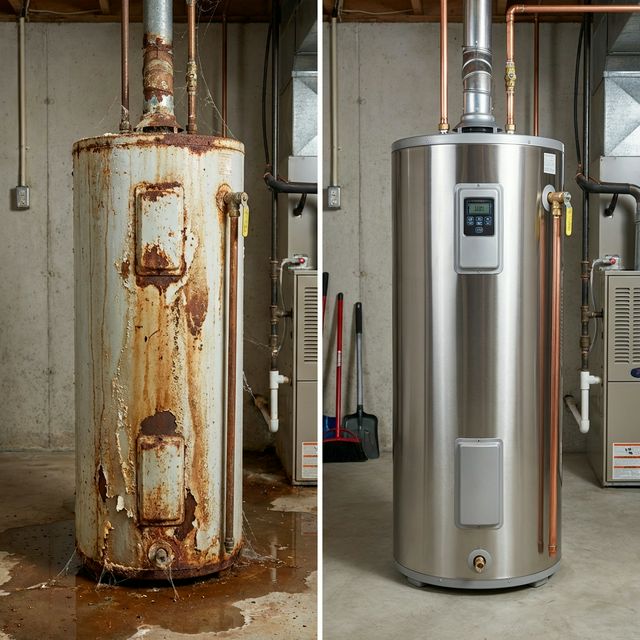
Unique angle here: decode the serial, then split repairable parts from a tank that is done. The cons-first machine chooser is tankless water heater pros and cons. A wrap only helps a tank that is still in service: how to insulate a water heater.
Desk note: Year bands below are research ranges from manufacturer literature, inspector write-ups, and Energy.gov replacement language. This desk did not age a fleet of tanks. “Best case with maintenance” is not a guarantee you will get 15 or 25 years. A shell leak ends the conversation regardless of the serial.
Water heaters do not expire on a printed birthday. They fail from a spent anode, a hard sediment crust, thermal cycling, or water chemistry. Read the plate first. Then decide whether you are keeping parts alive or shopping a replacement.
Before You Shop a New Heater
Do this in order. Replacing a 6-year-old tank because the first bucket was rusty is how people buy a heater for a spent rod.
- Read the data plate. Copy brand, model, serial, fuel, and gallons. Decode the serial (formats below). Age is one input. It is not a death sentence by itself.
- Glass-test hot vs cold. Brown or rusty on the hot side only is a tank/anode story. Brown on both sides is usually the well, the softener, or the municipal main — why is my hot water brown or rusty.
- Look at the floor. Water from the steel shell or under the foam is replacement. A drip from the drain valve, a T&P tube, or a fitting is a parts job — water heater repair: DIY vs plumber.
- Note the last flush and the last anode look. If nobody has opened the hex or the drain, do those before you price a new unit. Schedule: how often to flush.
- Then decide repair vs replace. Use the table below. Do not buy a 50-gallon box because the thermocouple failed.
Listing check (lifespan parts, not a new tank): if you still need a rod or a floor sensor, confirm the powered-anode listing is a 40–89 gallon residential probe on a dedicated 3/4-inch NPT port — RV-length CP-R probes share the same “powered anode” search.
If the tank stays and you only want a floor warning, a pan sensor is in best water leak detectors. Setpoint while you keep it: water heater thermostat adjustment.
Lifespan by Water Heater Type (Research Ranges)
| Type | Typical published window | Upper anecdotes (maintained) | Early failures (neglected) |
|---|---|---|---|
| Gas tank | 8–12 years | ~15 years | ~6 years |
| Electric tank | 10–15 years | ~18 years | ~7 years |
| Tankless gas | 15–20 years | ~25 years | ~10 years |
| Tankless electric | 15–20 years | ~25 years | ~10 years |
| Heat pump (hybrid) | 12–15 years | ~18 years | ~8 years |
These assume ordinary hardness. Very hard or aggressive water pulls every type toward the short end. Treat the right-hand columns as anecdotes from owner and plumber reports, not a warranty.
The Four Things That Kill Water Heaters
1. Corrosion: The Anode Rod
The tank is steel under a thin glass lining. Heat cycles crack that lining. Exposed steel rusts. The anode rod is the part that is supposed to corrode first.
Most tanks go years without anyone opening the hex. When the rod is a rusty wire, the tank is next. Rust-colored hot water from the hot side only is the usual tell. At that point you are inspecting for a remaining rod, not celebrating a “saved” tank.
What to do: Inspect on a calendar — when to replace your anode rod. Replace when the rod is thin or the core wire is showing. A $20–$50 sacrificial rod is a parts job. It is not a published “plus five years” coupon.
A powered titanium probe is the non-sacrificial option for a dedicated top port. The Corro-Protec powered anode for 40- to 89-gallon tanks is the residential length already used on this site. Confirm 3/4-inch NPT and a dedicated anode port, not a hot-outlet combo fitting and not the short CP-R RV probe. Compare listings in best powered anode rods.
2. Sediment Overheating the Tank
Minerals drop out as the water heats and sit on the floor. On gas, that layer sits between the flame and the water. The burner runs longer. The steel runs hotter than it was designed for. Popping is steam under the crust. On electric, sediment buries the lower element. You replace the element and the next one fails the same way if the grit stays.
What to do: Flush on a hardness-based schedule — how often to flush a water heater. If you are not sure you are due, check signs your water heater needs flushing.
3. Thermal Fatigue
Every heat cycle expands the steel a little. You cannot stop cycling. You can reduce how hard each cycle hits:
- Lower the thermostat and measure the tap. 120°F storage expands less per cycle than a factory 140°F tank. Walk water heater thermostat adjustment.
- Insulate only if the shell is warm. A blanket cuts standby loss on an older tank in a cold room. Skip a heat-pump jacket. Guide: how to insulate a water heater.
- Keep the heater in a conditioned space when you can. A cold garage swings harder than a utility closet.
4. Water Chemistry
Hardness gets the headlines. pH and dissolved chemicals matter too.
- Acidic water (pH below 7): Eats sacrificial rods faster
- Alkaline water (pH above 8.5): Scales elements and the floor faster
- Chloramines: Harder on some magnesium rods than chlorine
- High sulfate: Sulfate-reducing bacteria and rotten-egg odor
Well water: test it. Municipal: read the annual quality report. Match rod material and flush interval to the water you actually have — how hard water destroys a water heater.
Warning Signs the Tank Is Done vs Repairable
Rust-Colored Hot Water
Hot taps only: anode or tank interior. If a recent rod swap did not clear it, the lining is likely gone. Why is my hot water brown or rusty? walks the split.
Rumbling or Popping
Steam through sediment. A real flush may quiet it if the crust is still loose. If the noise stays after a clear stream, the floor is under chronic stress.
Moisture at the Base
Water from the steel wall, not the drain valve, T&P, or fittings, is a hole in the tank. That is not a patch. Drain the tank so you are not flooding the room while you shop.
Declining Hot Water Volume
Sediment stealing volume, a tired element, or a cracked dip tube. The first two are maintenance. A dip tube is a parts job.
Frequent Part Replacements
The same thermocouple or element every year is a systemic problem (venting, combustion, or sediment), not a reason to keep swapping the cheap part forever.
How to Find Your Water Heater’s Age
The manufacture date is in the serial on the data plate.
Common encodings:
- First four digits as YYMM: “1509” = September 2015
- First four digits as MMYY: “0915” = September 2015
- Letter code for month: A=January, B=February, and so on, plus a two-digit year
If the scheme is unclear, use the manufacturer’s serial decoder or the support line. Do not guess from the paint.
Repair vs. Replace
| Situation | Heater age | Desk recommendation |
|---|---|---|
| Thermocouple | Any | Repair (research $15–$25 part) |
| Heating element | Under ~10 years | Repair (research $10–$20 part) |
| Anode rod | Under ~12 years, tank dry | Repair (research $20–$50 part) |
| Drain valve | Any, tank not leaking | Repair (research $10–$30 part) |
| Gas valve | Under ~8 years | Maybe (research $200–$400 installed) |
| Gas valve | Over ~8 years | Usually replace the unit |
| Tank leak (steel shell) | Any | Replace the unit |
| Several issues at once | Over ~8 years | Usually replace the unit |
Rule of thumb used in trade write-ups: if the repair is more than about half a new unit and you are past the midpoint of the published window, replacement is the cleaner spend. That is a filter, not a quote. When you do replace, start with best water heater brands of 2026 and the fuel chooser electric vs. gas. Honest tankless cons: tankless pros and cons.
Skip the “Make It Last” Project
- Water from the steel shell or under the foam
- A T&P that dumps steadily
- Gas odor or a flue that spills
- A tank whose serial already puts it past the published window and the floor is wet
- You are trying to “save” a tank with a blanket or a hotter dial
If you are keeping the tank, write the install year and the last flush date on tape on the jacket. The printable list is the annual water heater maintenance checklist. Do not buy a random Amazon “checklist pad” — the on-site list is the one this desk maintains.
Related Guides
- When to Replace Your Anode Rod
- How Often Should You Flush a Water Heater?
- How to Insulate a Water Heater
- Water Heater Thermostat Adjustment
- Tankless Water Heater Pros and Cons
- How to Flush a Water Heater
- Signs Your Water Heater Needs Flushing
- 7 Signs Your Water Heater Is Failing
- Water Heater Repair: DIY vs. Plumber
- Annual Water Heater Maintenance Checklist
- Flush Schedule Calculator
Sources
- U.S. Department of Energy, When to Replace Your Water Heater, published lifespan and replacement language
- International Association of Certified Home Inspectors, inspection and age-determination methods
- Manufacturer use-and-care manuals (Rheem, A.O. Smith, Bradford White) for anode and flush intervals
Editorial Team
Nobody should pay a plumber $300 to turn a drain valve. Our guides are built from manufacturer documentation, plumbing code references, and the documented experience of homeowners and plumbers.