5 Signs Your Water Heater Needs Flushing
Not sure if your water heater needs a flush? These five warning signs tell you it's time to drain the sediment before it causes real damage.

December 15, 2024
Unique angle here: five sediment signals that tell you to open a hose — not the hose walkthrough itself. The flush steps live on how to flush a water heater. How often is how often to flush. The yearly task table is annual water heater maintenance checklist.
Desk note: Energy and dollar figures below are research ranges from Energy.gov water-heating notes and typical hardware listings, not a desk-measured 10-percent penalty on your serial number. This is a HowToDrainAHotWaterHeater.com Editorial Team research-desk sequence, not a shop diary.
Water heaters are easy to ignore. They sit in a basement or utility closet, quietly doing their job, and most homeowners don’t think about them until something goes wrong. The problem is that by the time something goes obviously wrong, the damage is already done.
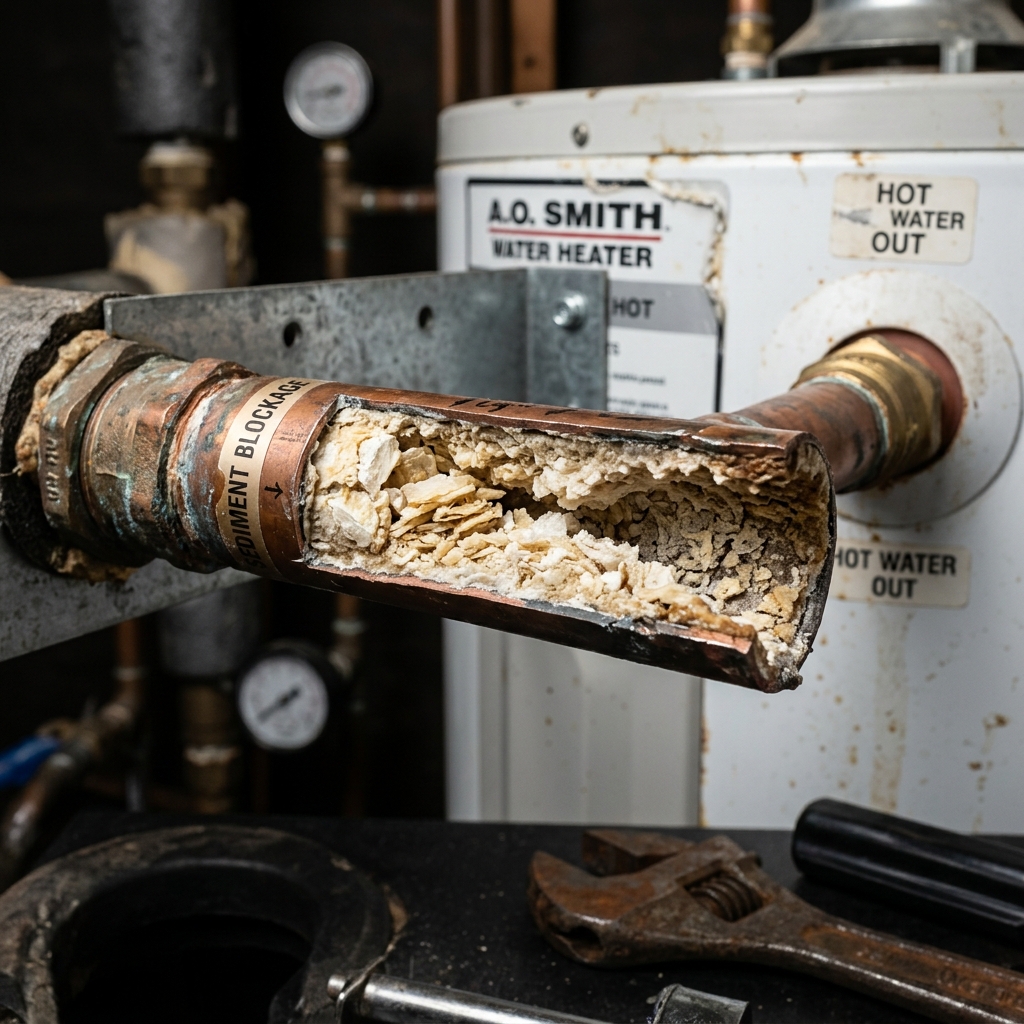
Sediment accumulation is the number one maintenance issue in tank-style water heaters. Minerals dissolved in your water supply, primarily calcium and magnesium, settle out as the water heats up and collect at the bottom of the tank. Over months and years, that layer grows thicker.
Here are five signs that tell you it’s time to flush.
Before You Blame Sediment
Do this in order. Connecting a hose because the tank “sounds busy” is how people flush a leaking shell, or skip a spent anode that is why the hot side is rusty.
- Separate flush signals from fail signals. Popping plus a tank that still holds water is this page. Water from the steel jacket or under the foam is replacement — water heater leaking from bottom. Persistent rust after a flush is why hot water is brown or rusty.
- Do not treat a cabin close as a sediment flush. Empty-and-leave-empty is how to winterize a water heater. A house that stays lived in uses the seasonal maintenance schedule or the annual checklist.
- Confirm hot-only before you shop a softener. Run the cold side of the same faucet. If both sides are dirty, the heater is not the first suspect. Fuel-specific extras after you flush: gas vs. electric maintenance.
- Then open a listing only if you are actually going to drain. A Flexzilla 5/8-inch by 50-foot garden hose is the hose this site already points at: garden-hose thread, stays flexible in a closet. A tagged water hardness test strip search is safer than guessing a strip-kit ASIN if you do not already know your utility ppm. Method: how to flush.
Listing check (flush-signal hose, not a vinegar jug): confirm 5/8-inch garden-hose thread sold for outdoor or utility use — tankless vinegar pumps and “descaler concentrate” jugs share the same sediment-symptom browse.
Money story: how we make money. Parts bin: water heater maintenance tools.
1. Popping, Rumbling, or Knocking Sounds
This is usually the first sign homeowners notice, and it’s the most distinctive. The sound comes from water trapped beneath the layer of sediment at the bottom of the tank.
Here’s what happens: your burner or heating element heats the water, but the sediment acts as a barrier. Water underneath the sediment layer gets superheated, forming steam bubbles. When those bubbles break through the sediment or collapse, they produce the popping and rumbling sounds you hear.
A light tapping or occasional pop might mean you’re in the early stages. Loud, persistent banging means the sediment layer is thick, and you should flush as soon as possible.
What it sounds like: Imagine placing a pot lid on a pot of boiling water. The rattling, tapping sound is similar. In severe cases, it sounds like someone is knocking on the inside of the tank.
How serious is it? On its own, the noise isn’t dangerous. But it means the tank bottom is being overheated, which accelerates wear on the lining and can eventually cause leaks.
2. Lukewarm Water or Slow Recovery
If your showers are running out of hot water faster than usual, or the water never gets as hot as it used to, sediment is a likely culprit.
The mechanism is straightforward: sediment insulates the bottom of the tank from the heat source. In a gas water heater, the burner sits directly below the tank. Water can’t absorb heat efficiently through a layer of calcium deposits. In an electric heater, the lower heating element can become partially or fully buried in sediment, drastically reducing its output.
The result is water that takes longer to heat and doesn’t reach your set temperature. You might compensate by turning up the thermostat, but that just wastes energy and accelerates sediment hardening.
The test: Time how long it takes your water heater to recover after a hot shower. A typical 40-gallon tank should recover in 30 to 45 minutes. If it’s taking an hour or more, sediment is likely slowing things down.
Related issue: If you have a two-element electric heater and only the bottom element is buried in sediment, you may notice that you still get hot water initially but it runs out quickly. That’s because the upper element is working fine, but the lower one isn’t contributing.
3. Discolored or Rusty Hot Water
Turn on a hot water faucet and let it run for 30 seconds. If the water looks cloudy, brownish, or has a rusty tint, something is corroding inside the tank.
There are two possible sources:
- Sediment in suspension. When sediment breaks loose from the bottom of the tank, it mixes with the outgoing water. This produces a murky or sandy appearance that usually clears after running the faucet for a minute.
- Tank corrosion. If the anode rod has been depleted and is no longer protecting the tank, the steel lining itself starts to corrode. Rust particles enter the water, giving it a reddish or orange color.
How to tell the difference: Run the cold water side of the same faucet. If the cold water is clear but the hot water is discolored, the source is your water heater, not your pipes. If both hot and cold are discolored, the issue may be in your supply pipes instead.
When it’s urgent: Persistent rusty water, especially combined with a metallic taste, usually means the anode rod needs replacement and the tank should be flushed immediately. If the anode rod is completely gone, the tank itself may be approaching the end of its life.
4. Higher Energy Bills Without Usage Changes
Your water heater is one of the largest energy consumers in your home, typically accounting for 15 to 20 percent of your utility costs. When sediment builds up, the heater has to work harder and run longer to bring water to temperature.
The insulating effect of sediment means the burner or element is working against a thermal barrier. Energy.gov water-heating notes treat sediment as an efficiency and tank-life problem. This desk does not invent a 10-percent energy penalty or a $400 operating-cost clock for your meter.
If your gas or electric bills have crept up gradually without any change in usage habits, and your water heater is more than two years old and has never been flushed, sediment is a reasonable suspect.
The context: Treat any “percent wasted” figure you see on a listing as a research snapshot, not a quote from this desk. The harder problem is the tank bottom cooking under a mineral layer.
What to compare: Look at your utility bills from the same month in previous years. Seasonal variation is normal, but if the trend is consistently upward with no explanation, the water heater’s efficiency is declining.
5. Unpleasant Smells or Metallic Taste
A rotten egg smell in your hot water is almost always caused by hydrogen sulfide gas. This happens when anaerobic bacteria colonize the sediment layer at the bottom of your tank. These bacteria feed on sulfates in the water and on the metals in a corroding anode rod, producing hydrogen sulfide as a byproduct.
The smell is distinct and unmistakable. It’s strongest when you first turn on the hot water after the heater has been idle for several hours, such as first thing in the morning.
Three possible causes:
- Magnesium anode rod reacting with sulfate-reducing bacteria. This is the most common cause. Replacing the magnesium rod with an aluminum-zinc rod often eliminates the smell.
- Heavy sediment providing a breeding ground for bacteria. Flushing the tank removes the sediment habitat these bacteria rely on.
- Water heater temperature set too low. Below 120 degrees Fahrenheit, bacteria can thrive. Keeping the thermostat at 120 or above helps control bacterial growth.
A metallic taste without the rotten egg smell usually points to a corroding anode rod or tank lining. Either way, flushing is the first step in diagnosing and addressing the issue.
What to Do Next
If you’re experiencing one or two of these symptoms, a standard flush should resolve the issue. Follow our step-by-step flushing guide for the full procedure.
If you’re dealing with three or more symptoms, especially rusty water combined with noises and reduced performance, consider a more aggressive approach:
- Flush the tank using the vinegar soak method for stubborn deposits.
- Inspect the anode rod. If it’s more than half depleted, replace it. Our anode rod guide covers the full inspection process.
- Check the tank age. If your water heater is over 10 years old and showing multiple symptoms, replacement may be more cost-effective than continued maintenance.
How to Prevent Sediment Buildup
Prevention is easier than the cure. A few simple habits will keep sediment under control:
- Flush annually. This is the single most effective thing you can do. Every six months if you have hard water.
- Set the right temperature. The Department of Energy recommends 120 degrees Fahrenheit. Higher temperatures accelerate mineral precipitation.
- Install a water softener. If your hardness exceeds 120 ppm, a whole-house water softener dramatically reduces the mineral load reaching your water heater.
- Check the anode rod every 2 to 3 years. A healthy anode rod prevents internal corrosion that contributes to sediment.
Frequently Asked Questions
Can sediment damage my water heater permanently?
Yes. Prolonged sediment accumulation can overheat the tank bottom, weaken the steel, and cause cracks or leaks. Once the tank is leaking, replacement is the only option.
Is sediment buildup dangerous?
Sediment itself is not dangerous to your health. However, bacteria growing in the sediment can produce hydrogen sulfide gas, which causes the rotten egg smell. The water is still safe to use, but flushing resolves the issue.
How long does it take for sediment to build up?
In areas with moderate water hardness, noticeable sediment can accumulate within one to two years. In hard water areas, significant buildup can occur in as little as six months.
Does a water softener eliminate the need for flushing?
A water softener significantly reduces mineral content, which slows sediment buildup. However, it doesn’t eliminate it entirely. Annual flushing is still recommended even with a softener installed.
My water heater is brand new. Do I still need to flush it?
Wait at least one year before your first flush (six months in hard water areas). New tanks start clean, but sediment begins accumulating from day one.
Skip the Symptom Flush, Call a Plumber
- You smell gas — leave, call the gas company from outside. That is water heater safety, not a sediment afternoon
- Water is coming from the steel shell or under the foam, not cloudy water at a tap
- The drain valve will not open, or it crumbles, with the tank still full
- Persistent rusty hot water after a flush plus a tank older than a decade — replacement math, not another vinegar soak
- You cannot isolate an electric tank at the breaker (panel work is not this page)
- The tank sits over finished floor and you cannot control the remaining water
Handle a confirmed flush-signal tank yourself if you can isolate power or gas and route the hose. For the DIY-versus-call split: water heater repair: DIY vs. plumber. Symptom index: troubleshooting.
Related Guides
- Annual Water Heater Maintenance Checklist
- Gas vs. Electric Water Heater Maintenance
- How to Winterize a Water Heater
- Water Heater Maintenance Schedule Checklist
- How to Flush a Water Heater
- How to Drain a Hot Water Heater
- When to Replace Your Anode Rod
- How to Flush Hub
- Water Heater Maintenance Tools
- Water Heater Troubleshooting
- How We Make Money
Sources
- A.O. Smith, Troubleshooting Guide, Common water heater symptoms
- U.S. Department of Energy, Water Heating, Maintenance and efficiency recommendations
- USGS, Water Hardness, How minerals affect your water heater
Editorial Team
Nobody should pay a plumber $300 to turn a drain valve. Our guides are built from manufacturer documentation, plumbing code references, and the documented experience of homeowners and plumbers.