How Hard Water Destroys Your Water Heater (And What to Do About It)
Hard water causes sediment buildup, scale on heating elements, and premature tank failure. Prevention saves thousands.

May 10, 2026
Safety Disclaimer
Water heater maintenance involves working with pressurized systems, scalding hot water, and potentially hazardous electrical or gas connections. Always shut off power (electric heaters) or gas supply (gas heaters) and allow water to cool to a safe temperature before beginning any maintenance. Wear appropriate safety equipment including gloves and eye protection. If you're uncomfortable with any step, contact a licensed plumber.
Unique angle here: get a hardness number (grains per gallon) before you buy a softener or a powered anode. Flushing is maintenance. It is not a chemistry fix.
Desk note: USGS hardness bands and manufacturer descaling / flush language below are published guidance, not a scale-growth experiment from this desk. This page does not invent a “25–40 percent energy” or “1–2 inches per year” figure. Those numbers show up on generic listicles; they are not measurements we ran. Cost ranges are typical listing and install research ranges, not quotes.
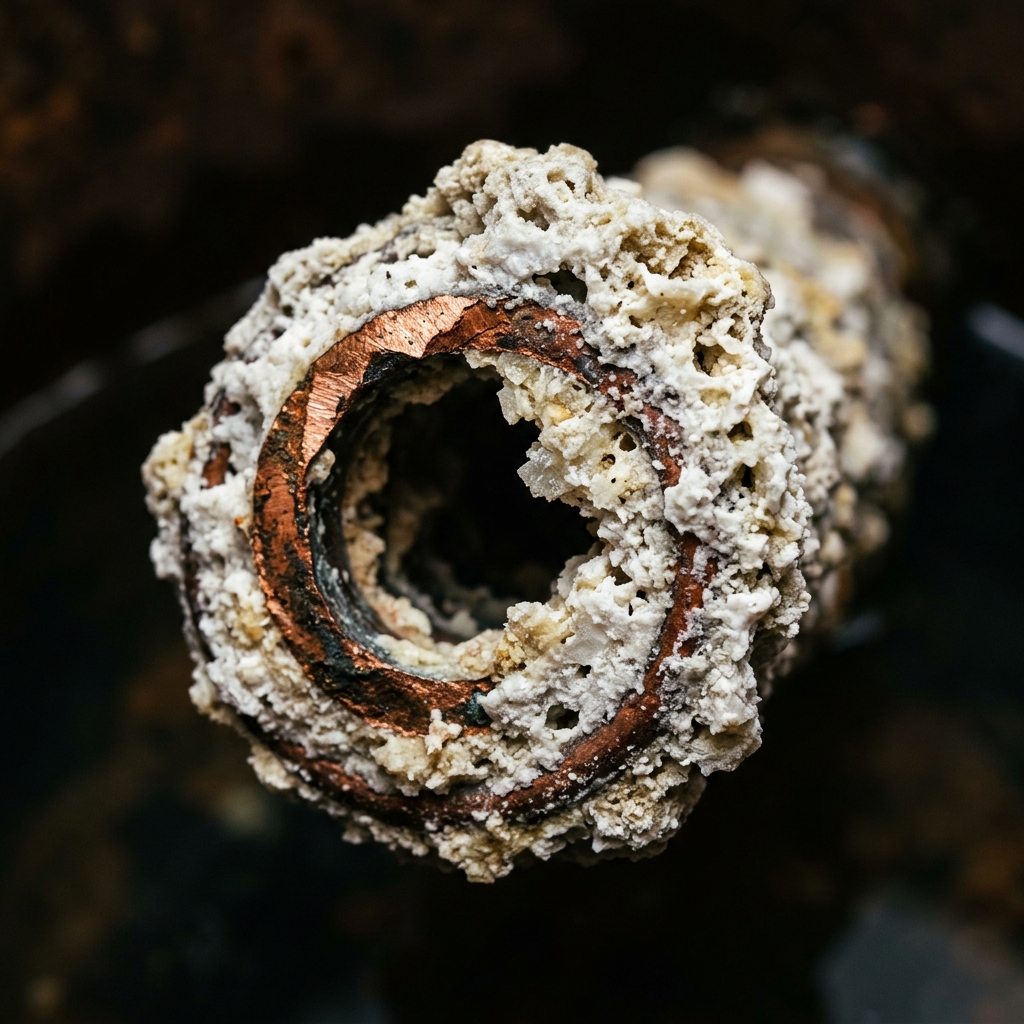
Hard water is calcium and magnesium in solution. Heat knocks those minerals out as scale and sediment. The tank, the elements, and a tankless exchanger all see it. The useful first fact is how hard, not a shopping cart of vinegar and rods.
Before You Buy a Softener or a Rod
- Get a GPG or ppm number. Your water utility’s consumer confidence report often lists hardness. A $10–$20 test strip kit is enough to put you in a USGS band. “The kettle scales” is not a grain count.
- Split tank vs tankless. A tank wants a drain-and-flush path and an anode you can reach. A tankless wants isolation valves and a descaling loop. Do not buy a tank flush kit for a condensing exchanger.
- Look at the drain sample. A quart from the drain valve after a short run tells you loose grit vs a tank that will not move water. Clogged valves are how to unclog a water heater drain valve.
- Look at color separately. Hardness is white/tan scale. Rust-brown hot-only water is iron or a spent anode — why hot water is brown or rusty.
- Then shop. Softener, flush hose, anode metal, or a heat-pump / tankless change are different SKUs.
A Flexzilla 5/8-inch by 50-foot garden hose is the drain hose this site already points at: garden-hose thread, stays flexible in a closet. Route it to a drain or outdoors. Do not dump scalding water on a walkway.
Listing check (hard-water flush hose): confirm garden-hose thread and a jacket sold for outdoor / utility use — washing-machine fill hoses and ice-maker lines share the same browse page.
If you do not have a floor drain, use how to drain a water heater with no floor drain. Next-flush timing from hardness and tank age is the flush schedule calculator.
What Hard Water Does to Your Water Heater
Hard water contains dissolved calcium and magnesium. When heated, those minerals precipitate as scale and as loose sediment.
Inside the Tank
Calcium carbonate drops to the bottom as chalky sediment. In very hard water, manufacturer maintenance notes and plumber write-ups describe a visible layer in a year or two — treat that as a pattern, not a thickness we measured.
That layer:
- Insulates the water from the burner or the lower element, so recovery takes longer
- Creates hot spots on the tank bottom that the same literature ties to faster lining stress
- Steals usable volume. A 50-gallon tank with a hardened floor does not deliver 50 gallons of hot water.
If the first morning draw is cloudy or the tank pops, start with a real flush — how to remove sediment from a water heater — not a larger heater. Size is what size water heater do you need after the tank is clean enough to judge.
On Electric Heating Elements
Scale coats the sheath and cuts heat transfer. Service literature treats a heavily scaled element as an overheat / burnout risk. There is no honest single percentage for “how much more energy.” Replace or clean the element after you drain; test it if the tank is lukewarm — how to test a water heater element.
On Tankless Heat Exchangers
Scale grows inside narrow passages, cuts flow, and trips error codes. Tankless warranties commonly require periodic descaling in hard water. Kits and vinegar vs commercial descaler are in best tankless flush kits.
Prevention Strategies
1. Water Softener (Best Solution)
A whole-house ion-exchange softener removes calcium and magnesium before they reach the heater. It also protects fixtures and the rest of the plumbing. Research range, not a quote: installed systems commonly list in the high hundreds to low thousands of dollars; salt is an ongoing cost often discussed around $100–$200 a year depending on hardness and household use.
Softened water can make a magnesium anode smell (sulfate bacteria). If the hot side smells like rotten eggs after a softener goes in, switch rod chemistry — anode rods explained.
2. Annual Flushing
Draining and flushing removes loose sediment before it cements. In hard-water houses this is routine, not optional. Use the compact hose sequence in how to flush your water heater or the longer complete flush guide.
Hard-water tanks also throw rust-tinted hot water once sediment and a thinning anode stack up. If the color is only on the hot side, read why hot water is brown or rusty. Persistent rust plus a wet shell is 7 signs your water heater is about to fail.
3. Lower the Temperature
Scale precipitation speeds up as tank temperature climbs. Energy.gov and manufacturer notes both treat a 120°F setpoint as easier on the tank than a factory 140°F. Measure first — what temperature should your water heater be set to. Do not drop below a temperature you have actually thought through for Legionella and the people in the house.
4. Powered Anode Rod
A powered titanium probe is sold for corrosion protection. Some manufacturer copy also claims less scale adhesion. Treat that as a side claim, not a substitute for flushing or a softener. Compare listings in best powered anode rods. A common 40–89 gallon residential probe is the Corro-Protec powered anode. Confirm a dedicated 3/4-inch NPT top port, not a hot-outlet combo fitting, and not an RV-length probe.
Closed plumbing plus a hotter, scaled tank also raises expansion pressure. If the T&P drips on every heat cycle, read do you need an expansion tank.
Hard Water Map
The USGS classifies water hardness in grains per gallon (GPG):
- 0-3.5 GPG: Soft (minimal impact)
- 3.5-7.0 GPG: Moderate (annual flushing recommended)
- 7.0-10.5 GPG: Hard (water softener strongly recommended)
- 10.5+ GPG: Very hard (water softener essential)
Those bands are USGS / water-quality language. “Recommended” here means the usual maintenance conversation, not a law. The hardest water in the US is commonly mapped in the Southwest, Great Plains, and Upper Midwest — check your utility, not a national color blob, before you buy a softener.
Related Guides
- How to Remove Sediment From a Water Heater
- How to Flush Your Water Heater
- How to Flush a Water Heater
- Flush Schedule Calculator
- What Size Water Heater Do You Need?
- What Temperature Should Your Water Heater Be Set To?
- 7 Signs Your Water Heater Is About to Fail
- Do You Need a Water Heater Expansion Tank?
- Water Heater Anode Rods Explained
- Best Powered Anode Rods
Sources
- USGS, water hardness
- U.S. Department of Energy, Water Heating
- Manufacturer flush and descaling FAQs (Rheem, A.O. Smith, tankless brands)
Editorial Team
Nobody should pay a plumber $300 to turn a drain valve. Our guides are built from manufacturer documentation, plumbing code references, and the documented experience of homeowners and plumbers.