Water Heater Making Popping Noises? Here's What It Means
Find out why your water heater is making popping or knocking sounds and learn how to fix it. Sediment buildup is the most common cause.

April 1, 2026
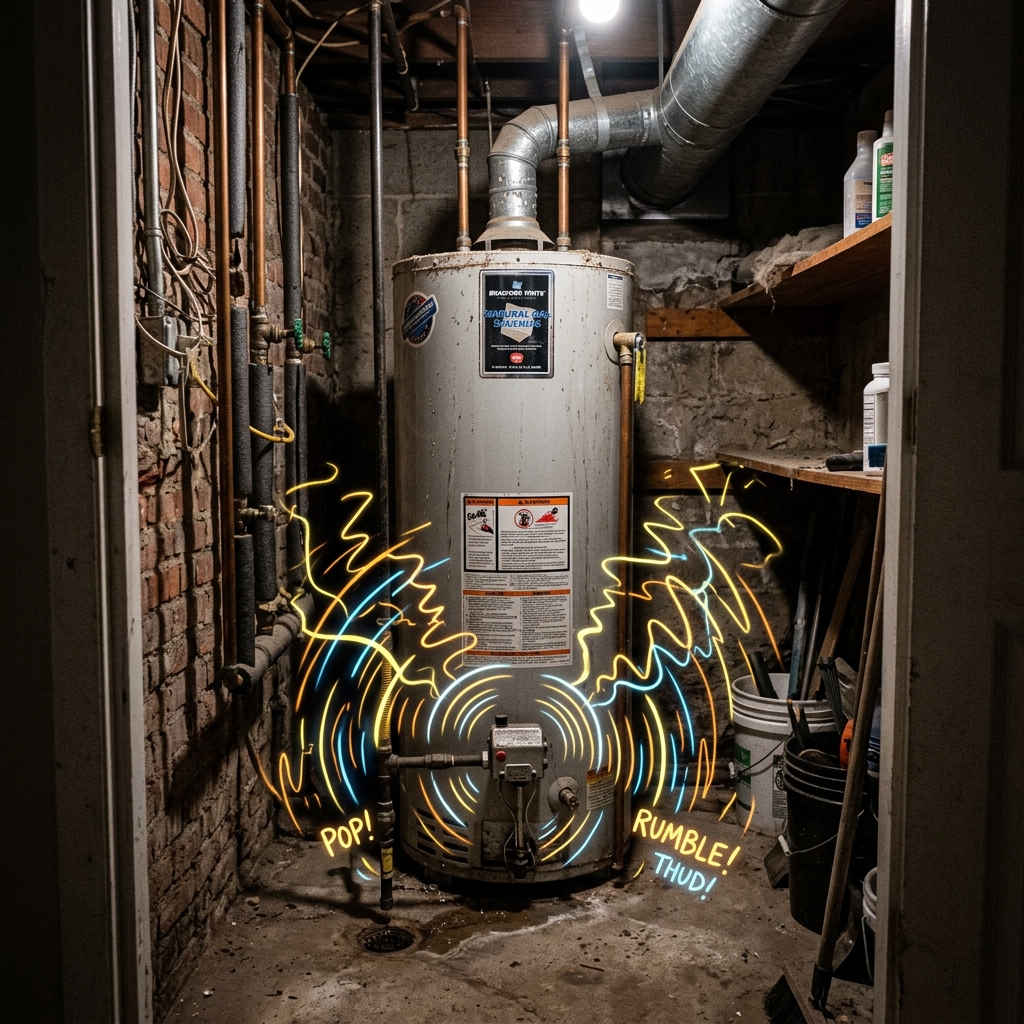
Unique angle here: what popping means and the sediment fix — steam under a mineral crust, not a dying burner. The full noise-type diagnostic (hammer, expansion tick, loose element) is water heater making noise. Water on the floor plus noise is water heater leaking from bottom.
Desk note: This page does not invent a sediment-efficiency percent. Energy.gov and manufacturer manuals tell you to flush. They do not publish a desk-measured energy cut for a half-inch crust. This is a HowToDrainAHotWaterHeater.com Editorial Team research-desk sequence, not a shop diary and not a staged acoustics lab.
You are sitting in the living room and hear a rhythmic popping or knocking coming from the utility closet. It sounds like someone tapping on metal from the inside. That is your water heater telling you something is wrong.
The usual cause is sediment, and a flush often quiets it when the layer is still loose. This guide explains what is happening inside the tank, why it matters, and how to stop it.
Before You Flush for Popping
Do this in order. Buying a “tank descaler kit” first is how people pour vinegar into a full, hot tank and call the pops fixed.
- Confirm the sound is the tank heating, not a pipe bang. Sediment pops start shortly after the burner or lower element comes on. A single bang when a washer shuts off is hammer — that lives on water heater noise troubleshooting.
- Cut the heat and let the tank cool. Gas: control to Off or Pilot per the label. Electric: breaker off. Do not open a packed drain valve on a scalding tank.
- Look at the floor before you connect a hose. Water at the base is water heater leaking from bottom, not a longer flush. A sulfur smell or a T&P that will not stop is water heater safety.
- Sample the drain water. Open the valve slightly into a bucket. Cloudy, gritty water supports a sediment story. Nothing coming out is water heater not draining, not a popping-noise afternoon.
- Then hose. A Flexzilla 5/8-inch by 50-foot garden hose is the hose this site already points at: garden-hose thread, stays flexible in a closet. If the factory plastic valve is why you have been skipping the flush, the Camco brass drain valve is the garden-hose-thread replacement already used on this site — install it after the water line is below the port, not as a “noise tool.” A tagged garden hose search is safer than guessing a vinegar-jug descaler ASIN.
Listing check (popping-noise hose, not a descale jug): confirm 5/8-inch garden-hose thread sold for outdoor or utility use — tankless descaler kits and drinking-water RV hoses share the same “sediment noise” browse.
Money story: how we make money. Flush method: how to flush hub.
What Causes Popping Sounds in a Water Heater
The short answer is sediment. Every gallon of water that enters your tank carries dissolved minerals, primarily calcium and magnesium. As the water heats, these minerals precipitate out of solution and settle at the bottom of the tank.
Over months and years, this sediment layer grows. When the burner fires (gas heaters) or the lower element activates (electric heaters), it heats the water trapped beneath the sediment. That trapped water turns to steam, and the steam bubbles rise through the sediment layer, popping as they break free.
Think of it like water boiling under a layer of sand. The thicker the sediment, the louder and more frequent the popping becomes.
Gas vs. Electric: Different Sounds
Gas water heaters tend to produce louder, more distinct popping because the burner sits directly beneath the tank bottom where sediment collects. The heat is concentrated in one area, creating more aggressive steam pockets.
Electric water heaters often produce a lower rumbling or humming instead of sharp pops. The lower heating element sits inside the tank, sometimes partially buried in sediment. When it activates, the sediment around it crackles and shifts.
Both types need the same fix, but the sound profile helps you identify which kind you have if you are not sure.
Why You Should Not Ignore It
Popping noises are your water heater’s early warning system. Here is what happens if you let it go:
Reduced efficiency. Sediment acts as an insulating layer between the heat source and the water. Your heater has to run longer and harder to reach the set temperature. Energy.gov treats flushing as maintenance. It does not publish a desk-measured efficiency percent for every tank. Sediment steals volume and makes the burner or element work through a crust.
Overheating at the tank bottom. When the burner has to work overtime to push heat through the sediment, the steel at the bottom of the tank gets hotter than it was designed to handle. Over time, this weakens the metal and accelerates corrosion.
Premature tank failure. A weakened tank bottom is how leaks start. Once the steel thins enough, water finds its way through, and you are looking at a replacement rather than a simple maintenance job.
Hardened sediment. Fresh sediment is loose and flushes out easily. Sediment that has been baked repeatedly by the burner hardens into a calcium crust that is extremely difficult to remove. The longer you wait, the harder the fix becomes.
How to Diagnose the Problem
Before you start flushing, take a minute to confirm that sediment is actually the issue. Other things can cause water heater noises, and misdiagnosing the problem wastes time.
Confirm It Is Sediment
- Listen to the timing. Sediment pops happen shortly after the burner ignites or the element turns on. If the sound happens only when the heater is actively heating, sediment is the likely cause.
- Check the water age. If you have not flushed your water heater in over a year, or ever, sediment is almost certainly present.
- Look at the drain water. Open the drain valve slightly and let a quart of water flow into a bucket. If it comes out cloudy, discolored, or with visible grit, you have sediment.
Rule Out Other Causes
- Thermal expansion. A ticking or creaking sound, especially from the pipes rather than the tank, is often thermal expansion. Hot pipes expand and rub against wood framing or pipe straps. This is harmless and unrelated to sediment.
- Water hammer. A single loud bang when a faucet or appliance shuts off is water hammer, caused by a pressure wave in the pipes. It has nothing to do with the water heater itself.
- Loose heating element. On electric heaters, a buzzing or humming that occurs even without sediment may indicate a loose element. See our guide on how to test a water heater element.
- High water pressure. If your home’s water pressure exceeds 80 PSI, the pressure relief valve may intermittently release, creating a hissing or popping sound near the top of the tank.
How to Fix a Popping Water Heater
The fix is straightforward: flush the tank to remove the sediment.
Quick Flush (15 Minutes)
If the popping just started and you suspect a light sediment layer:
- Turn off the gas valve or flip the breaker for the water heater.
- Connect a garden hose to the drain valve at the bottom of the tank.
- Run the hose to a drain, utility sink, or outside.
- Open the drain valve and let water flow for five to ten minutes.
- Close the valve, disconnect the hose, and restore power.
This works well for minor buildup. If the water runs clear quickly, you caught it early.
Full Drain and Flush (45-60 Minutes)
For heavier sediment or if the quick flush did not stop the noise, do a complete drain. Our step-by-step draining guide walks through the full process, including safety precautions.
The key steps are:
- Shut off the power and cold water supply.
- Let the water cool for two to three hours.
- Connect a hose and open the drain valve fully.
- Once the tank is empty, briefly turn the cold water supply back on to stir up remaining sediment.
- Repeat the cold water flush until the water runs clear.
- Close the valve, refill the tank completely, and restore power.
When Flushing Is Not Enough
If you flush the tank and the popping continues, the sediment may have hardened into a calcite layer that will not dislodge with water flow alone. In that case:
- Try a back-flush. This involves forcing water backward through the drain valve under pressure. See our guide on how to back flush a water heater for the technique.
- Use a descaling solution. Pouring white vinegar into the tank and letting it sit for several hours can dissolve calcium deposits. This works best when the tank is mostly empty.
- Call a professional. If the sediment is severe and the tank is more than eight years old, a plumber can assess whether the tank bottom has been compromised. At that point, replacement may be more cost-effective than repeated descaling.
How to Prevent Popping Noises
Prevention is easier than the fix. A few habits keep sediment from building up in the first place.
Flush annually. Once a year is sufficient for most households. If you live in a hard water area, flush every six months. Check for signs your water heater needs flushing between scheduled maintenance.
Lower the temperature. Higher temperatures accelerate mineral precipitation. Keeping your heater at 120 degrees Fahrenheit instead of 140 reduces sediment formation significantly. Our temperature settings guide covers the tradeoffs.
Install a water softener. If your home has hard water (above 7 grains per gallon), a whole-house water softener removes the calcium and magnesium before they reach the tank. This is the single most effective way to prevent sediment buildup.
Check the anode rod. A functioning anode rod prevents corrosion inside the tank. When the anode rod fails, corrosion products add to the sediment load. Inspect it every two to three years and replace it when it is more than 50 percent depleted.
When Popping Means Something Serious
In rare cases, popping noises signal a more urgent problem:
- Popping combined with a sulfur or rotten egg smell may indicate a bacterial reaction inside the tank. This requires a chlorine flush and possibly an anode rod replacement.
- Popping accompanied by water on the floor means the tank may already be leaking. Check the bottom of the unit, the temperature and pressure relief valve, and all pipe connections. Our water heater safety guide covers what to do when you find a leak.
- Continuous, rapid popping that does not stop even after the burner shuts off could indicate extreme overheating. Turn off the heater immediately and call a professional.
For many tanks, popping is a maintenance issue with a flush — not a new heater. Flush the tank, set a reminder on a hardness-and-age schedule, and the noise often goes away.
Skip the Noise Flush, Call a Plumber
- You smell gas or sulfur you cannot explain — leave, call the gas company from outside
- Water is on the floor from the steel shell or under the foam
- The T&P is dumping steadily, or pops continue after the burner or element shuts off
- The drain valve is seized and will not turn without loading the tank fitting
- You cannot isolate an electric tank at the breaker
- You have flushed, back-flushed, and the tank is more than about 10 to 12 years old with a crust that will not move
No hot water after you restore power: no hot water after flushing. No hot water at all: hot water heater not working. Symptom index: troubleshooting.
Related Guides
- Water Heater Leaking from Bottom
- Hot Water Heater Not Working
- No Hot Water After Flushing
- Water Heater Safety Guide
- Water Heater Making Noise
- How to Flush a Water Heater
- How to Drain a Hot Water Heater
- How to Flush Hub
- Water Heater Maintenance Tools
- Water Heater Troubleshooting
- How We Make Money
Sources
- U.S. Department of Energy, Water Heating, flush-as-maintenance language
- International Association of Certified Home Inspectors, Water Heater Inspection, Noise diagnosis guidelines
Editorial Team
Nobody should pay a plumber $300 to turn a drain valve. Our guides are built from manufacturer documentation, plumbing code references, and the documented experience of homeowners and plumbers.